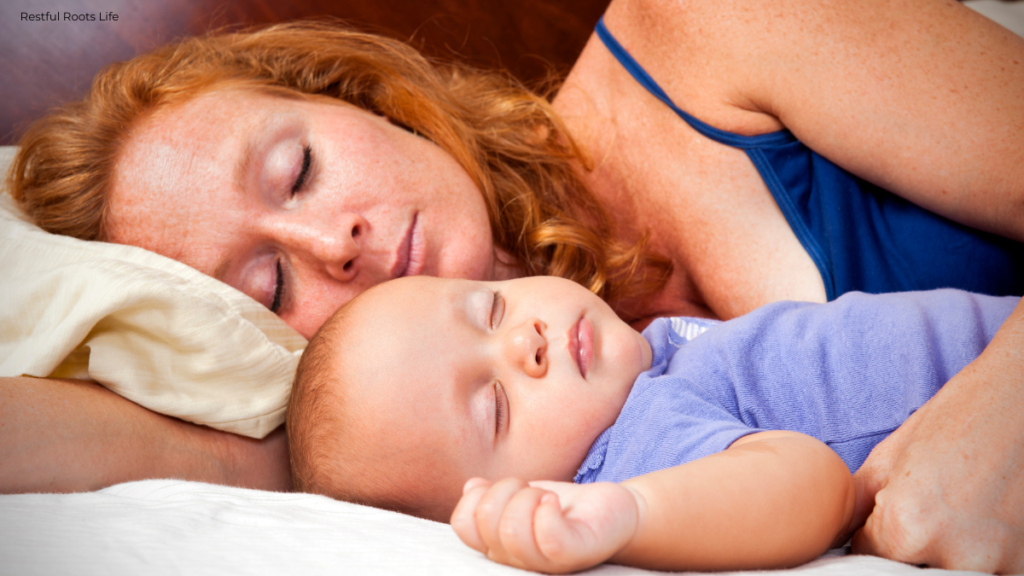
If you’ve ever found yourself awake at 2 a.m., holding a baby who refuses to settle anywhere but against your chest, you’ve probably stared at the ceiling and wondered:
Is co-sleeping the answer… or am I creating a bigger problem?
First, take a breath. You’re not alone—and you’re not doing anything wrong by asking the question.
The truth is, co-sleeping isn’t all good or all bad. Like most things in parenting, it’s less about picking a “right” side and more about finding a balance that works for your family—safely, intentionally, and without guilt.
Let’s walk through it together.
What Is Co-Sleeping (Really)?
Co-sleeping simply means sleeping close to your child. But there’s often confusion around the term, so let’s clarify:
-
Bed-sharing: baby shares your bed with you
-
Room-sharing: baby sleeps in a bassinet, crib, or sidecar sleeper in your room
For many families, co-sleeping starts out of pure necessity—exhaustion, relentless night wakings, or a baby who screams the second they’re placed in a separate space. It’s rarely the meticulously planned parenting choice we imagine. It’s survival.
And that doesn’t make you “wrong.” It makes you human.
The Benefits of Co-Sleeping
For some families, co-sleeping becomes a lifeline—not just for sleep, but for sanity.
Easier Night Wakings
When your baby stirs, you’re already there. There’s no stumbling down a hallway, no fully waking yourself up to walk to another room. Feeding, soothing, and settling often happen in a drowsy, half-awake rhythm—and everyone drifts back to sleep faster.
A Stronger Sense of Connection
Physical closeness can support bonding, especially in those early months when everything feels new and overwhelming. Many parents describe a deep sense of reassurance in knowing their baby is right there—safe, warm, breathing softly beside them.
More Sleep (Sometimes)
Let’s be honest: it’s not a guarantee. Some parents sleep better with baby close; others sleep worse, hyperaware of every wiggle and sniffle. But for many, the ability to stay in bed rather than fully getting up multiple times a night makes the difference between functioning and barely surviving.
The Challenges (That No One Talks About Enough)
Co-sleeping can bring relief, but it can also come with trade-offs that catch parents off guard.
Sleep Associations
Babies are brilliant pattern-recognizers. If they learn that falling asleep requires your warmth, your smell, your presence, they may struggle to settle without it. This doesn’t mean you’ve “ruined” sleep forever—but it can make independent sleep a slower road.
The Mental Load
Even when you’re lying down, you may find you’re not truly resting. You’re aware of every movement, every sound, every shift in breathing. For some parents, this constant low-level alertness becomes its own form of exhaustion.
Conflicting Advice (and Judgment)
You’ll hear strong opinions from all sides—family members, friends, online forums, even pediatricians with differing views. It can leave you second-guessing yourself at 3 a.m., wondering if you’re making a mistake no matter what you choose.
Safety First: If You Choose to Co-Sleep
If you decide to bed-share, safety has to be non-negotiable. Not all co-sleeping is created equal, and the way you set up your space matters.
Create a Safe Sleep Space
-
Firm mattress—memory foam or pillow-top surfaces increase suffocation risk
-
No loose blankets, pillows, or stuffed animals near baby
-
Baby on their back, not on their side or stomach
-
Long hair tied back, no dangling jewelry or strings from clothing
Know the Risk Factors
Do NOT bed-share if:
-
You or your partner have consumed alcohol, cannabis, or any medication that causes drowsiness
-
You are extremely overtired (yes, the exhaustion that makes co-sleeping tempting also makes it less safe)
-
You are on a soft surface like a couch, recliner, or waterbed—these are dangerously unsafe, even for naps
Consider Room-Sharing First
If you want closeness with fewer risks, room-sharing (baby in a separate but nearby sleep space) is often the sweet spot. A bedside bassinet or sidecar sleeper keeps baby within arm’s reach without sharing your sleep surface.
Finding Your Balance
Here’s what doesn’t get said enough:
You don’t have to choose one way and stick with it forever.
Some families:
-
Co-sleep temporarily during a regression or illness
-
Transition to independent sleep later, when everyone’s ready
-
Mix approaches—starting the night in a crib, bringing baby into bed after the first wake-up
-
Co-sleep with one child while another sleeps independently
Parenting isn’t static—and sleep doesn’t have to be either.
When It Stops Working
If You’re Ready for a Gentle Transition…
If co-sleeping has stopped working, you don’t have to figure out the next step on your own.
I created a simple, 6 page gentle plan to help you move away from co-sleeping in a way that still feels connected and manageable.
This printable includes:
- A step-by-step transition plan you can follow at your own pace
- Daily guidance so it doesn’t feel overwhelming
- Supportive scripts for those harder moments
- Encouragement for when things don’t go perfectly
It’s designed to help you make a change without pressure, guilt, or rigid rules.
Co-sleeping can be beautiful for a season, and then it can start to feel different. Pay attention when:
-
You’re no longer getting restful sleep
-
You feel touched out, overstimulated, or resentful
-
You’ve lost your own sense of space or intimacy with your partner
-
Your child is waking more frequently instead of less
That’s not failure. That’s information.
You’re allowed to shift. You’re allowed to need rest, too. And you’re allowed to make a change even if co-sleeping “worked” for a while.
A Gentle Reminder
There’s no gold star for doing it one “right” way.
There’s only:
-
What’s safe for your child
-
What’s sustainable for you
-
What helps your family actually function
If you’re getting enough sleep to show up as the parent you want to be, that matters more than whether your baby sleeps in a crib or beside you.
If You’re Feeling Overwhelmed at Night…
The hardest part of sleep isn’t always the logistics—it’s staying calm when you’re running on empty.
If you’re working on that too (and honestly, who isn’t?), my Calm Boundaries, Connected Kids guide gives you simple scripts and reset tools for those moments when you feel like you’re about to lose it—whether it’s 2 p.m. or 2 a.m.
Final Thoughts
Co-sleeping isn’t a failure. It isn’t a shortcut. It isn’t something you have to defend.
It’s just one tool in your parenting toolbox.
Use it intentionally. Adjust when needed. And give yourself permission to figure it out as you go—because sleep, like so much of parenting, is rarely a straight line.
One steady night at a time,
Jen