When overwhelm builds, your body reacts before your mind — here’s how to stay grounded in the moment
Gentle parenting sounds calm and connected in theory. Soft voices. Clear boundaries. Respectful communication.
But real life doesn’t always cooperate.
Some days, you’re doing everything “right,” and you still feel overwhelmed, triggered, and one breath away from losing your cool. If that’s you, you’re not failing at gentle parenting — you’re experiencing nervous system overload.
Let’s talk about how to stay calm when gentle parenting triggers you, and why this has less to do with mindset and more to do with what’s happening inside your body.
A Moment From Real Life
The other morning, both of my two-year-old twins needed me at the exact same time.
One was crying because their snack broke in half.
The other was climbing onto the table.
The noise was constant. The needs were overlapping.
I tried to stay calm. I validated feelings. I redirected. And underneath it all, I could feel my body tightening — jaw clenched, chest tense, thoughts racing.
Not because anything was truly urgent, but because I was overstimulated.
That’s usually how gentle parenting triggers begin — not with anger, but with overload.
Why Gentle Parenting Triggers the Nervous System
Most gentle parenting advice focuses on what to say or how to respond.
But triggers don’t start in your words — they start in your body.
When your child doesn’t listen, melts down, or pushes boundaries, your nervous system may interpret it as:
- loss of control
- threat
- chaos
Your body reacts first. Logic comes later.
This is why you can know the tools and still feel triggered. Calm isn’t a mindset — it’s a physiological state.
And until your body feels safe, gentle parenting strategies feel harder to access.
The Early Signs You’re About to Lose Your Calm
Most parents think they go from calm to yelling instantly, but there’s usually a buildup.
Gentle parenting triggers often show up as:
- clenched jaw or tight shoulders
- shallow breathing
- racing thoughts
- sudden urge to control the situation
These aren’t failures. They’re signals.
When you learn to notice these early signs, you can step in before your reaction escalates.
Start With a Simple Reset
If this feels familiar, start small. You don’t need to change everything at once — you just need a way to reset in the moment.
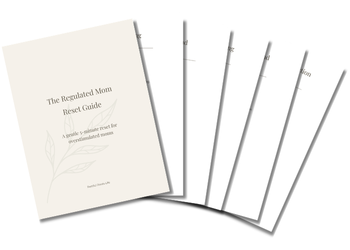
This free Regulated Mom Reset Guide gives you a simple, step-by-step way to calm your body, reduce overwhelm, and respond with more intention — even on hard days.
It’s designed to be quick, practical, and easy to come back to whenever you need it.
Calm Is a Body Skill, Not a Parenting Rule
When you’re triggered, your nervous system is in survival mode. This is not the moment for long explanations, perfect scripts, or parenting mantras.
Staying calm during gentle parenting isn’t about saying the right thing — it’s about helping your body settle enough to respond instead of react.
That’s why short, physical regulation tools are often more effective than trying to “think” your way through the moment.
If you’re finding yourself stuck in these overwhelmed, reactive cycles, you’re not alone — and you don’t have to piece this together on your own.
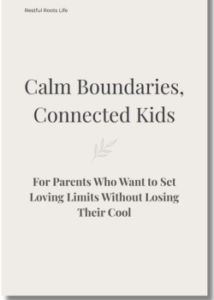
I created a 27-page Calm Boundaries guide to walk you through exactly how to stay regulated, hold limits, and reconnect with your child in real-life moments — even when you feel overstimulated or triggered.
Inside, you’ll find simple scripts, body-based reset tools, boundary examples, and step-by-step guidance you can come back to again and again.
How to Stay Calm When Gentle Parenting Triggers You
1. Pause Yourself — Not the Boundary
You don’t need to fix everything immediately.
If you feel triggered, it’s okay to slow the moment down:
“I need a moment.”
This isn’t giving up control. It’s preventing escalation. Boundaries still stand — you’re just regulating first.
2. Use a 30-Second Body Reset
When things escalate quickly, try one small physical reset:
- press your feet into the floor
- take one slow exhale (longer out-breath)
- drop your shoulders and unclench your jaw
- turn your body slightly away for a second
These tiny movements tell your nervous system it’s okay to stand down.
Calm often begins here.
3. Reduce Words When You’re Overstimulated
When your body is activated, fewer words are better.
Gentle parenting doesn’t require explanations in the heat of the moment. Calm first. Connection later.
Silence, presence, and grounding often communicate more than talking ever could.
4. Reconnect Once Your Body Settles
After regulation comes reconnection.
You might say:
“That was hard. I’m here.”
This teaches children that:
- emotions are manageable
- conflict isn’t dangerous
- connection returns after hard moments
That’s a core lesson of gentle parenting — and it doesn’t require perfection.
Gentle Parenting Doesn’t Fail When You Get Triggered
Getting triggered doesn’t mean gentle parenting isn’t working.
It means your body needs support.
The problem isn’t that you lost your calm — it’s that no one taught parents how to regulate themselves while caring for others.
Repair, awareness, and returning to connection matter far more than staying calm every time.
Gentle Parenting Is a Practice, Not a Performance
If gentle parenting triggers you, you’re not doing it wrong.
You’re learning how to:
- notice your body’s signals
- slow down reactive patterns
- parent with awareness instead of autopilot
That kind of growth takes time — and it counts, even on messy days.
Gentle reminder:
You don’t need to be calmer than your capacity.
You need tools that support your nervous system too
One steady day at a time
Jen