This post contains affiliate links. If you make a purchase through these links, I may earn a small commission at no extra cost to you. Thank you for supporting Restful Roots Life — it helps me keep creating free and affordable resources for parents like you.
There’s a common misconception in the parenting world, but understanding the toddler routine benefits can completely change the tone of your day. While honoring our child’s voice is crucial, the secret ingredient to a peaceful, connected home is actually something far less glamorous: routine.
If you’ve ever faced the 5 p.m. witching hour meltdown or battled over every single step of the bedtime process, you know that toddlers and complete unpredictability don’t mix.
From a gentle parenting perspective, a routine isn’t about marching to a strict, minute-by-minute schedule. It’s about creating a predictable rhythm for the day. And for a toddler, this predictability is the ultimate form of emotional safety.
Here’s why a gentle, predictable routine is the cornerstone of a connected family life.
1. The World is Overwhelming; Home Should Be Safe
Imagine being a toddler. You have minimal control over your life. You’re whisked from home to daycare, told to stop playing to eat, and then pulled away from your snack to put on shoes. Your entire world is a series of events happening to you.
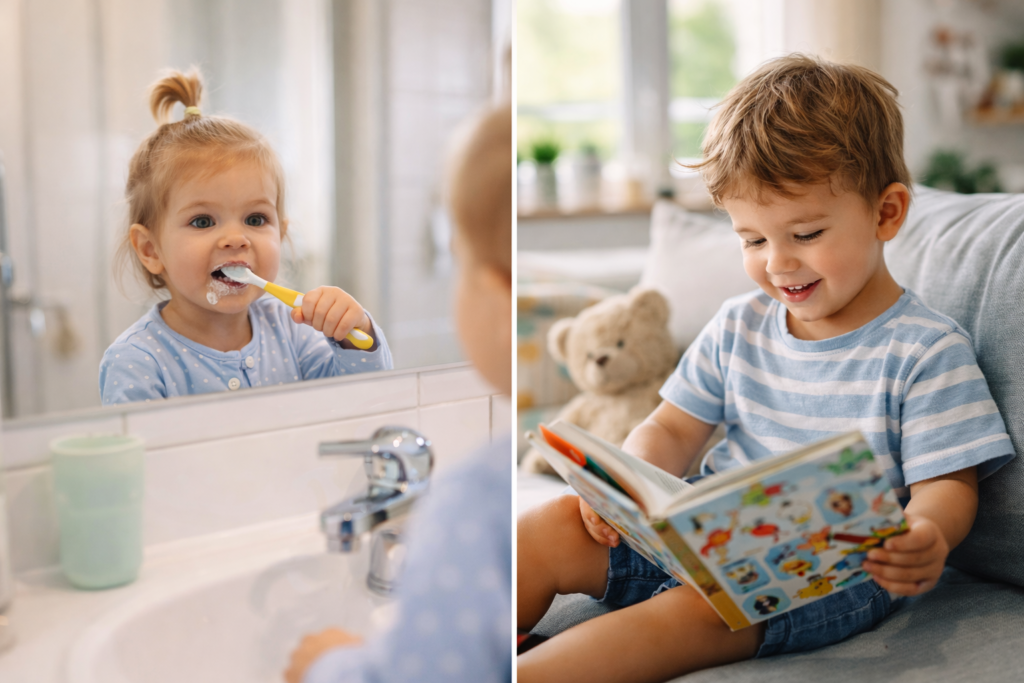
A routine flips the script. When a child knows that after breakfast comes playtime, and after playtime we tidy up and go to the park, they feel a sense of mastery. They aren’t constantly bracing for the next unexpected transition.
The Gentle Parenting Link: When a child feels safe and knows what to expect, they aren’t in a state of stress or “fight or flight.” This lowers their cortisol levels (the stress hormone) and allows their beautiful, curious, and cooperative brain to come online. They can relax into being a child because they trust you to steer the ship calmly.
2. The Power of “What Comes Next” (and Fewer Power Struggles)
How many of your daily battles sound like this?
· “No! I don’t want to put my shoes on!”
· “I’m not tired! I don’t want to go to bed!”
These aren’t usually acts of defiance. They are a toddler’s way of saying, “I was enjoying this, and I don’t like being yanked away from it without warning.”
A routine, especially when paired with visual cues, puts the power back in their hands. It’s no longer you forcing them to stop playing; it’s just “what comes next.”
· Instead of: “Put your toys away, right now!” (Enter: meltdown)
· Try: “Our routine says after playtime, we have tidy-up time, and then we go to the park. Look, the park is next on our chart!” (Enter: a child who feels informed and in control).
Routines give them the structure they need. But let’s be real — even with the best routine, there will still be moments they push back. That’s where having the right words makes all the difference. I put together everything I’ve learned in my printable Calm Boundaries, Connected Kids — 27 pages of real scripts, repair tools, and affirmation cards for moments just like this.
3. Routines Build Connection, Not Just Compliance
This is where gentle parenting truly shines. A routine shouldn’t be a cold checklist. It’s an opportunity for micro-connections.
Think about the “routine” of leaving the house.
· The Checklist Approach: “Shoes. Coat. Bag. Let’s go. Stop dawdling.”
· The Gentle Rhythm Approach: “Okay, it’s almost time to go. Let’s wave bye-bye to the toys. Can you help me find your left shoe? Found it! High five! Let’s snuggle your coat on—one arm, two arms! All ready for our adventure!”
The tasks are the same, but the energy is completely different. The routine becomes a shared dance rather than a battle of wills. These small moments of connection are the glue of the parent-child relationship.
4. The Emotional Security Blanket
Toddlers are learning to manage big feelings. A predictable routine gives them the emotional bandwidth to do so.
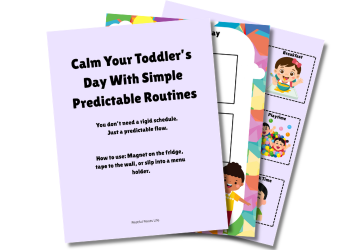
When the framework of the day is solid and known, a toddler has more mental space to handle the small frustrations that come up. They aren’t also worrying about what’s happening next. This is why children often meltdown more on days that are chaotic or full of surprises—their little systems are overloaded. Sometimes using a simple
visual schedule – like these charts can turn chaos into calm.
If your days feel chaotic or transitions are the hardest part, this is a simple place to start.
I created a gentle daily rhythm printable with visual routine cards, a “what comes next” chart, and easy transition prompts to help your toddler feel more secure and cooperative.